For clothing brands, the garment itself is only part of the customer experience. The labels and tags attached to a product play a critical role in communicating brand identity, product quality, sizing information, and care instructions. That’s why custom clothing labels and tags are considered essential components of professional apparel production.
Whether you’re launching a startup fashion brand, managing a sportswear company, or producing private-label clothing, investing in high-quality custom labels and tags can help your products stand out in a highly competitive market.
Why Custom Clothing Labels and Tags Matter
Many new apparel brands focus heavily on fabric, design, and marketing while overlooking the importance of garment trims.
However, custom labels and tags serve several important functions:
Brand Recognition
Your label is often the first branding element customers see when they examine a garment.
A professionally designed label helps:
- Build brand awareness
- Increase perceived value
- Create a premium appearance
- Strengthen customer loyalty
Successful fashion brands use labels as a long-term branding tool rather than simply an information tag.
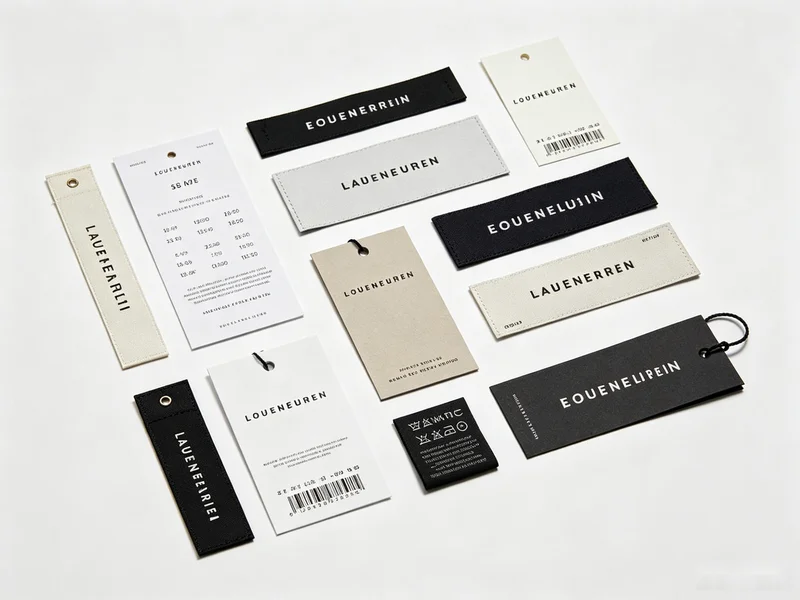
Product Information
Clothing labels provide important details such as:
- Brand name
- Garment size
- Fabric composition
- Country of origin
- Care instructions
In many countries, some of this information is legally required for apparel products.
Customer Experience
Poor-quality labels can cause:
- Skin irritation
- Fading information
- Fraying edges
- Negative brand perception
High-quality labels improve both comfort and professionalism.
What Are Custom Clothing Labels?
Custom clothing labels are permanent branding elements attached to garments.
They are commonly sewn into:
- Necklines
- Side seams
- Waistbands
- Hems
- Sleeves
The most popular label types include:
Woven Labels
Woven labels are created by weaving threads directly into the design.
Advantages:
- Premium appearance
- Excellent durability
- Professional branding
Best for:
- Fashion brands
- Luxury apparel
- Premium streetwear
Printed Labels
Printed labels use ink to apply information onto fabric.
Advantages:
- Cost-effective
- Ideal for detailed information
- Fast production
Common uses:
- Care labels
- Size labels
- Fabric composition labels
Satin Labels
Satin labels feature a soft, smooth surface.
Advantages:
- Comfortable against skin
- Clear print quality
- Lightweight construction
Popular for:
- Baby clothing
- Underwear
- Sportswear
Heat Transfer Labels
Also known as tagless labels.
Advantages:
- No sewn-in tag
- Improved comfort
- Clean appearance
Commonly used in:
- Activewear
- Performance apparel
- Children’s clothing
What Are Custom Clothing Tags?
Unlike labels, clothing tags are usually removable branding or marketing pieces attached to garments before sale.
The most common type is the hang tag.
Hang Tags
Hang tags are attached using string, ribbon, or plastic fasteners.
They often include:
- Brand logo
- Product description
- Price information
- Marketing messages
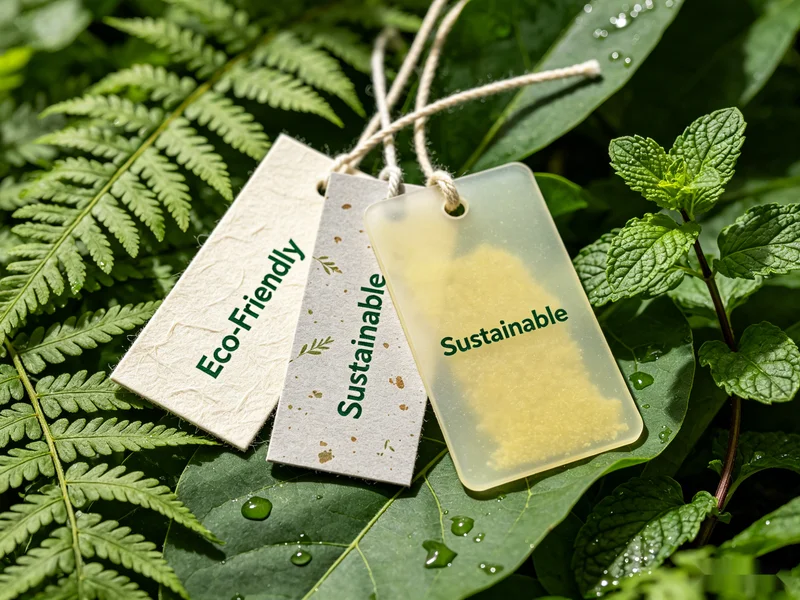
- Sustainability claims
For many apparel brands, hang tags act as a miniature advertisement attached directly to the product.
Specialty Tags
Additional tag options include:
- Kraft paper tags
- Recycled paper tags
- Cotton tags
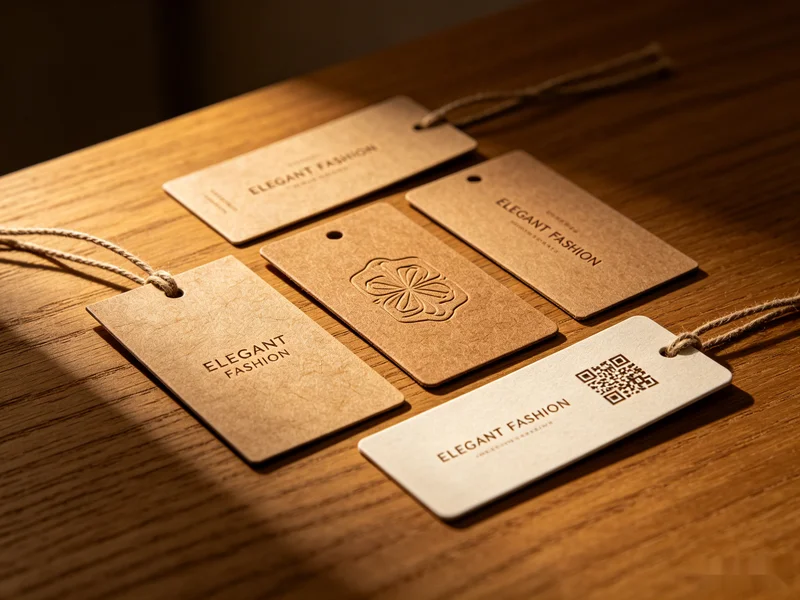
- Premium embossed tags
- Foil-stamped tags
These help reinforce brand positioning.
Essential Labels Every Clothing Brand Needs
Many startup brands ask:
“Which labels and tags do I actually need?”
The answer depends on your product category, but most apparel brands require the following:
Brand Label
Displays:
- Brand logo
- Brand name
Usually positioned inside the neckline.
Size Label
Shows:
- XS
- S
- M
- L
- XL
Often combined with the main brand label.
Wash Care Label
Contains:
- Washing instructions
- Drying instructions
- Fabric content
- Country of origin
Critical for compliance and customer satisfaction.
Hang Tag
Used for:
- Product presentation
- Retail display
- Brand storytelling
Hang tags significantly enhance perceived product value.
How Custom Clothing Labels and Tags Support Brand Growth
Create a Professional Image
Customers often associate premium labels with premium products.
A well-designed label system can help smaller brands compete with larger fashion companies.
Improve Brand Recall
Consistent branding across:
- Labels
- Tags
- Packaging
Makes your products more memorable.
Increase Perceived Value
Even a simple garment can appear more premium when paired with:
- High-quality woven labels
- Luxury hang tags
- Custom packaging
Many consumers subconsciously judge product quality based on these details.
Design Tips for Custom Clothing Labels and Tags
Keep the Design Simple
The best labels are usually:
- Clean
- Readable
- Timeless
Overly complicated designs may become difficult to reproduce at small sizes.
Prioritize Readability
Small labels must remain legible.
Choose:
- Clear fonts
- Adequate spacing
- Strong contrast
Match Your Brand Positioning
For example:
| Brand Type | Recommended Label Style |
|---|---|
| Luxury Fashion | High-density woven labels |
| Streetwear | Woven labels + premium hang tags |
| Sportswear | Heat transfer labels |
| Kidswear | Satin labels |
| Sustainable Brands | Recycled labels and tags |
Consider Comfort
Customers dislike scratchy labels.
Soft woven labels, satin labels, and heat-transfer solutions often provide a better wearing experience.

Common Mistakes Brands Make
❌ Choosing the Cheapest Option
Low-cost labels often result in:
- Fading logos
- Frayed edges
- Poor print quality
❌ Ignoring Compliance Requirements
Many markets require:
- Fiber content
- Care instructions
- Country of origin information
Missing information can create regulatory issues.
❌ Inconsistent Branding
Using different logos, colors, or fonts across labels and tags weakens brand identity.
❌ Forgetting Future Scalability
A label system should work across:
- T-shirts
- Hoodies
- Jackets
- Hats
- Accessories
Consistency is important as brands grow.
Trends in Custom Clothing Labels and Tags
Sustainable Materials
Growing demand for:
- Recycled polyester labels
- Organic cotton labels
- FSC-certified hang tags
- Eco-friendly inks
Sustainability is becoming a key purchasing factor for many consumers.
QR Code Integration
Modern clothing tags increasingly include QR codes that link to:
- Product information
- Brand stories
- Authentication systems
- Care instructions
Minimalist Branding
Many fashion brands are moving toward:
- Monochrome labels
- Small logo applications
- Clean typography
This creates a more premium and modern appearance.

Why Choose BSJ for Custom Clothing Labels and Tags?
With 28 years of manufacturing experience, BSJ provides complete apparel branding solutions for clothing brands, garment factories, sportswear companies, and private-label manufacturers worldwide.
BSJ Product Range
✅ Woven labels
✅ Printed labels
✅ Satin labels
✅ Heat transfer labels
✅ Wash care labels
✅ Hang tags
✅ PVC labels
✅ Silicone labels
✅ Custom packaging accessories
BSJ Manufacturing Advantages
✅ In-house production facility
✅ OEM & ODM support
✅ Fast sampling services
✅ Low MOQ and bulk production capability
✅ Strict quality control standards
✅ Global export experience
Whether you’re launching a new clothing brand or scaling an established apparel business, BSJ can help create a professional and consistent branding system tailored to your products.
Final Thoughts
Custom clothing labels and tags are much more than garment accessories—they are powerful branding tools that influence customer perception, product presentation, and long-term brand recognition.
From woven labels and satin care tags to premium hang tags and heat-transfer branding solutions, the right combination of labels and tags can elevate the perceived value of your apparel and create a stronger connection with customers.
With BSJ’s 28 years of apparel trim manufacturing expertise, clothing brands can confidently develop custom labeling solutions that enhance professionalism, support compliance, and strengthen brand identity in global markets.
About Author
——————————————————————————————————————————————

Alexander
Online Sales Manager
Alexander specialize in digital marketing and understanding customer psychology, providing clients with the right solutions through data insights and creative strategies.
——————————————————————————————————————————————